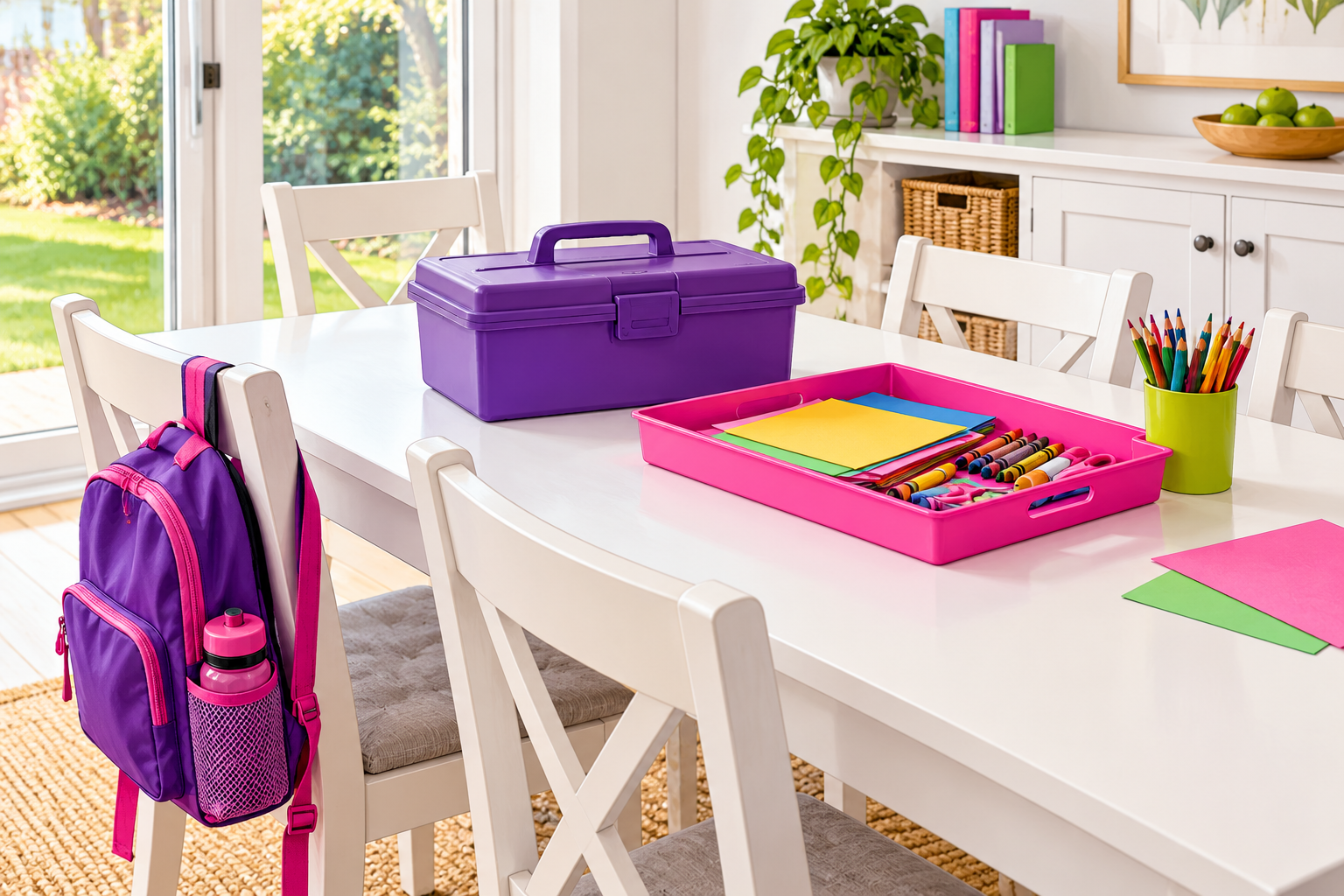
Let the table have more than one job
A dining table can be a homework desk, a craft space and the place everyone eats. In a Southsea flat or a busy Portsmouth family home, a separate room for each activity may not be an option. The aim is to make changing between those jobs easier. Start by noticing what usually stops the table being ready for a meal: loose pencils, unfinished projects or supplies with nowhere convenient to go.
Keep the everyday kit small
Gather the things used most often for homework into a container you can comfortably carry. An existing box or tray can hold pencils, a rubber and the notebooks needed that week. Keep occasional supplies elsewhere so the daily kit stays manageable. Before adding storage, check that the container fits its resting place and that household members can return it without moving a stack of other things.
Give unfinished work a safe pause
Packing away need not mean abandoning a project. A shallow tray can hold a small piece of work in progress, while a folder protects loose sheets. Choose a place where it can wait without being crushed or splashed. For something too large to move, agree how long it needs the table and when it can be put away. Take a photograph of a temporary arrangement if that would make restarting easier.
Make the changeover a shared routine
Before an activity starts, decide what needs to happen when it ends. Return pencils to the kit, gather paper into the folder and move the tray to its agreed place. Give each person a small task suited to what they can manage. A clear next step is easier to follow than an instruction to tidy everything. Leave enough time to finish the changeover before the table is needed again.
Separate useful paper from saved creations
Not every sheet needs the same destination. Current homework belongs with school things; spare usable paper can return to the craft kit. Let children help choose which finished pictures they want to display or keep. A defined folder gives those choices a boundary without requiring an immediate decision about every drawing. Keep scissors, adhesives and other supplies stored appropriately for the people using the space, following product guidance.
Try the arrangement during an ordinary week
Notice whether the kit is easy to fetch and whether it actually gets returned. If supplies keep being left on the table, the resting place may be too far away or the container too full. Change that small obstacle first. The goal is a table that can support family life, including a little mess, and become usable again without a major sorting session.
If you would like help finding a manageable starting point, tell Amal about your space and postcode. The Home Helper offers practical organising support in Southsea and Portsmouth, with scope and costs discussed before you commit.