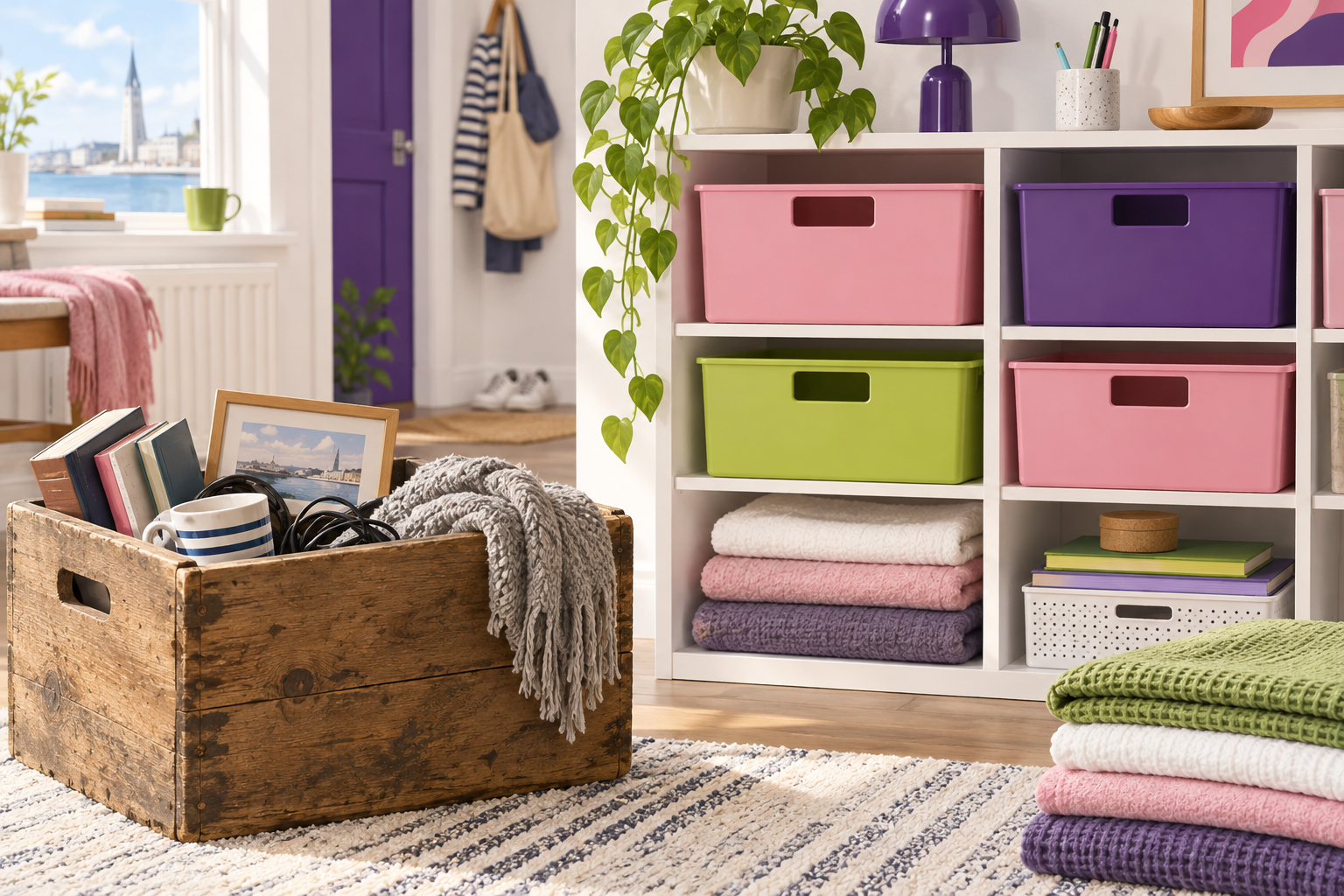
The wish for a home that takes less effort is much older than a neatly labelled pantry. Designers were thinking carefully about everyday household movements a century ago.
The kitchen as a working space
In the 1920s, architect Margarete Schütte-Lihotzky developed the Frankfurt Kitchen for housing projects in Germany. The V&A describes how its layout was planned to reduce unnecessary movement, with storage and working surfaces arranged around daily tasks.
It was not the first fitted kitchen, but it was produced on a large scale: around 10,000 were made. Its reception also offered a useful warning. Some women felt that the compact, separate kitchen isolated them from family life. Efficiency on paper did not automatically mean a better experience for everyone.
Historical source: V&A, Domestic life in a Modern world.
The lesson worth keeping
Our takeaway is to organise around the way a household actually lives. Before choosing a container, notice where a task happens and what you reach for. Where do you make breakfast? Where does the school bag land? Which cupboard do you open three times while preparing a packed lunch?
Try keeping the objects for one repeated task together. A breakfast shelf could hold the everyday bowls and cereal. A low basket near the door could catch the shoes used most often. Use what you already own before buying anything new.
Make room for people, too
Organisation should work for more than the person who set it up. Ask everyone who uses the space whether the arrangement is easy to understand and maintain. A solution that needs constant reminders may need simplifying.
There is also no obligation to remove every decorative or sentimental thing. A home can be practical and full of personality. The question is whether the things in it support your life, rather than whether they match a particular picture.
A small experiment for this week
Choose one everyday task. Move the things you need closer to where you use them, then try the arrangement for a week. Keep what helps and adjust what does not. That is a useful way to test an idea before reorganising a whole room.
Explore more stories