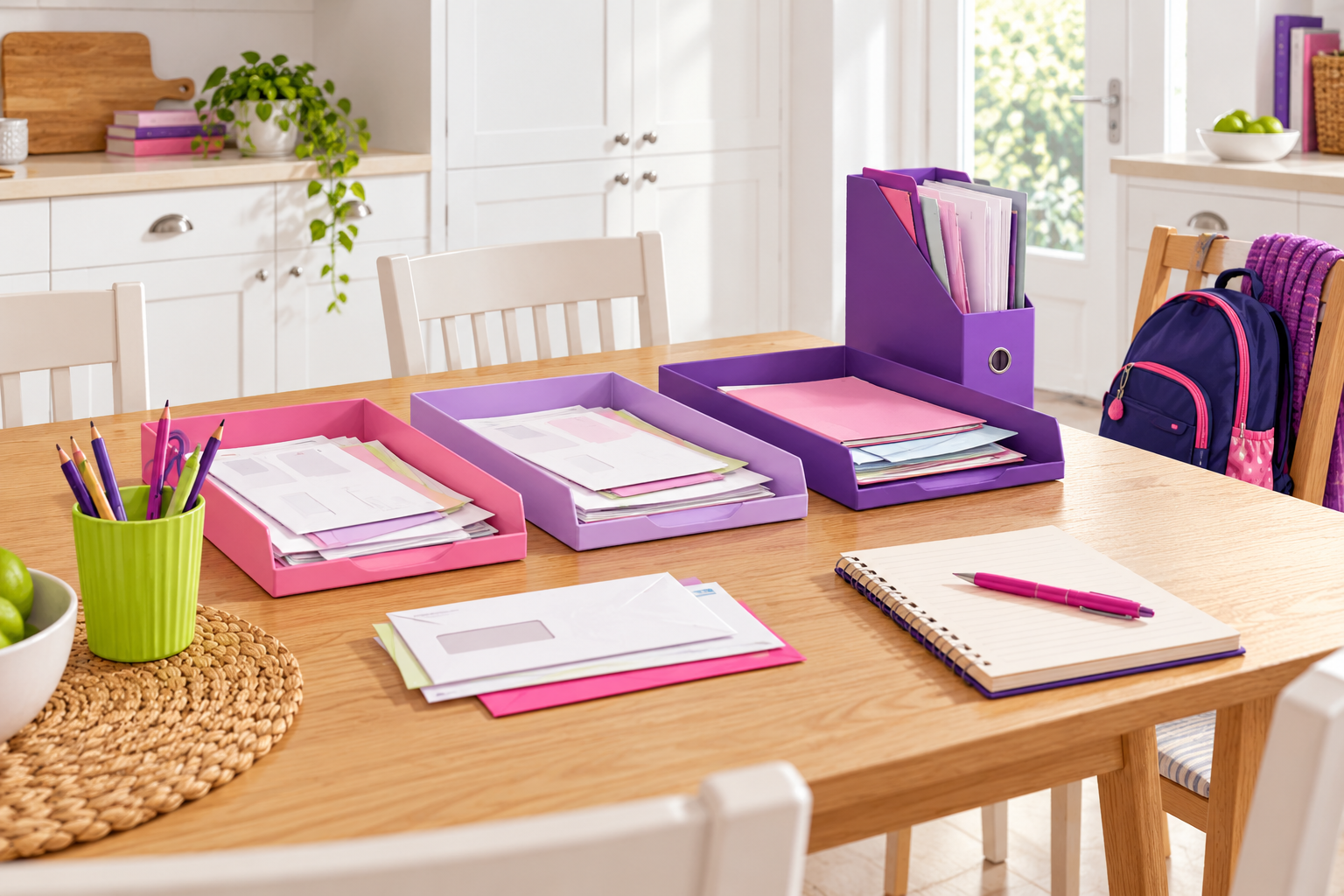
Start with today’s post, not every old folder
Paperwork can spread across a dining table surprisingly quickly: a school letter, an appointment reminder, a receipt you meant to check. In a busy Portsmouth or Southsea household, the useful goal is being able to find the next thing you need. Begin with the latest small pile. Leave the long-standing archive for another session so that one manageable task does not become a whole weekend.
Give incoming paper one landing place
Choose a tray, a folder or an empty box you already own. Put it where the adults who deal with post can reach it, away from food preparation and spills. Bring new paperwork there instead of leaving it on several surfaces. A shared landing place works best when everyone knows what it is for; it does not need to be on display if a cupboard suits your home better.
Sort by the next action
Look at one item at a time. Separate things that need a response from documents you need to keep and paper you no longer need. For an action item, write a specific next step in your usual notebook or calendar: complete a form, check a detail or make a call. Add the actual deadline where there is one. A paper tray holds the document; a reminder helps you return to it.
Make school letters easy to return to
When a letter arrives, check who needs it and whether there is a date or reply required. Put useful dates in the calendar your household already uses. Keep the letter with other current school information until it is dealt with, rather than mixing it with older drawings and keepsakes. If information arrives by email or an app, use the same reminder routine so that paper and digital messages do not become two separate jobs.
Keep the filing system small
Use a few categories that make sense to you, such as home, school and household purchases. Keep originals where they are needed and check the issuer’s guidance before discarding anything important. A photograph or scan can help you refer to a document, but do not assume it always replaces the original. Store private papers securely and dispose of personal information carefully. You can start with existing folders before buying any new storage.
Choose a short, regular check
Pick a moment when you can look through the action pile, finish one task and file the papers you have used. Before stopping, leave the table ready for its next job. If the same item keeps returning to the pile, make its next step smaller or ask the relevant organisation for clarification. A useful system should support ordinary family life, with room to adjust when routines change.
If paperwork is part of a wider organising challenge, you can talk to Amal about choosing a manageable starting point in your home.