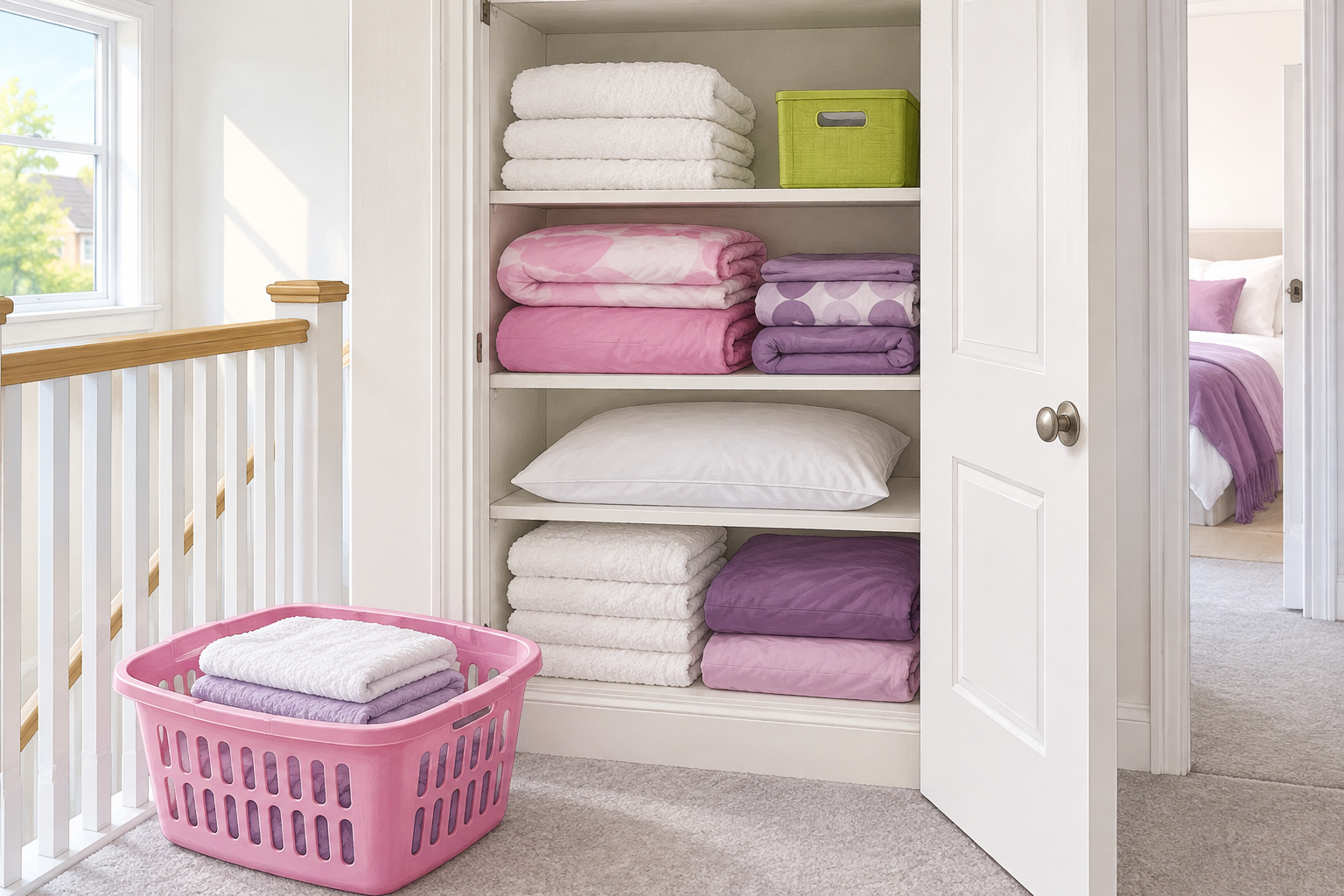
Start with the shelf you use most
When a fresh towel brings down a pile of bedding, the cupboard is asking to do too much. In a Portsmouth family home or a Southsea flat, linen storage may be one narrow cupboard or a couple of shelves. Begin with the part you reach for most often. Take out only what you can sort and return in a short session, keeping the landing and stairs clear.
Check what still fits your household
Group towels with towels and bedding by the bed it fits. Check sheet sizes and whether duvet covers still match the duvets you use. A set left over from an old bed can take up useful space without doing a job. Keep the decision practical: what does your household use, what is needed while another set is being washed, and what genuinely serves a guest or spare bed? There is no single correct number for every home.
Give complete sets a simple home
Keep the parts of a bedding set together so a change of sheets does not become a search. You might fold the matching items into one pillowcase or place them together on a shelf. Choose whichever method is easy for you to repeat. A small removable label identifying the bed or size can help when several sets look alike. Folding does not have to be perfect for the cupboard to work.
Put everyday items within easy reach
Give regularly used towels and bedding the easiest shelf to reach. Keep stacks low enough to remove one item without disturbing everything above it. Store less frequently used linen in another suitable spot if the cupboard is tight, rather than squeezing it into every gap. Use stable shelves within their intended load and leave room to put clean items back. Avoid using a high stack as a way to fill awkward space.
Keep linen dry and the cupboard usable
Make sure washed bedding and towels are fully dry before storing them, following the care labels. If this is an airing cupboard containing a cylinder, pipes or other equipment, keep the access, ventilation and clearances required by the equipment guidance. Do not cover controls or turn service space into extra shelving. A storage reset should make the cupboard easier to use without getting in the way of its other purpose.
Finish the extras rather than moving the pile
Set aside worn or surplus items and choose a realistic next step. Check current donation or textile collection rules before taking them anywhere; acceptance varies by organisation and condition. Keep that outgoing group separate from the linen you use, then arrange to deal with it. After the next wash, notice whether putting clean bedding away is easier. Adjust one shelf if needed before buying containers or attempting the rest of the house.
If you would like help finding a manageable starting point, tell Amal about your space and postcode. The Home Helper offers practical organising support in Southsea and Portsmouth, with scope and costs discussed before you commit.