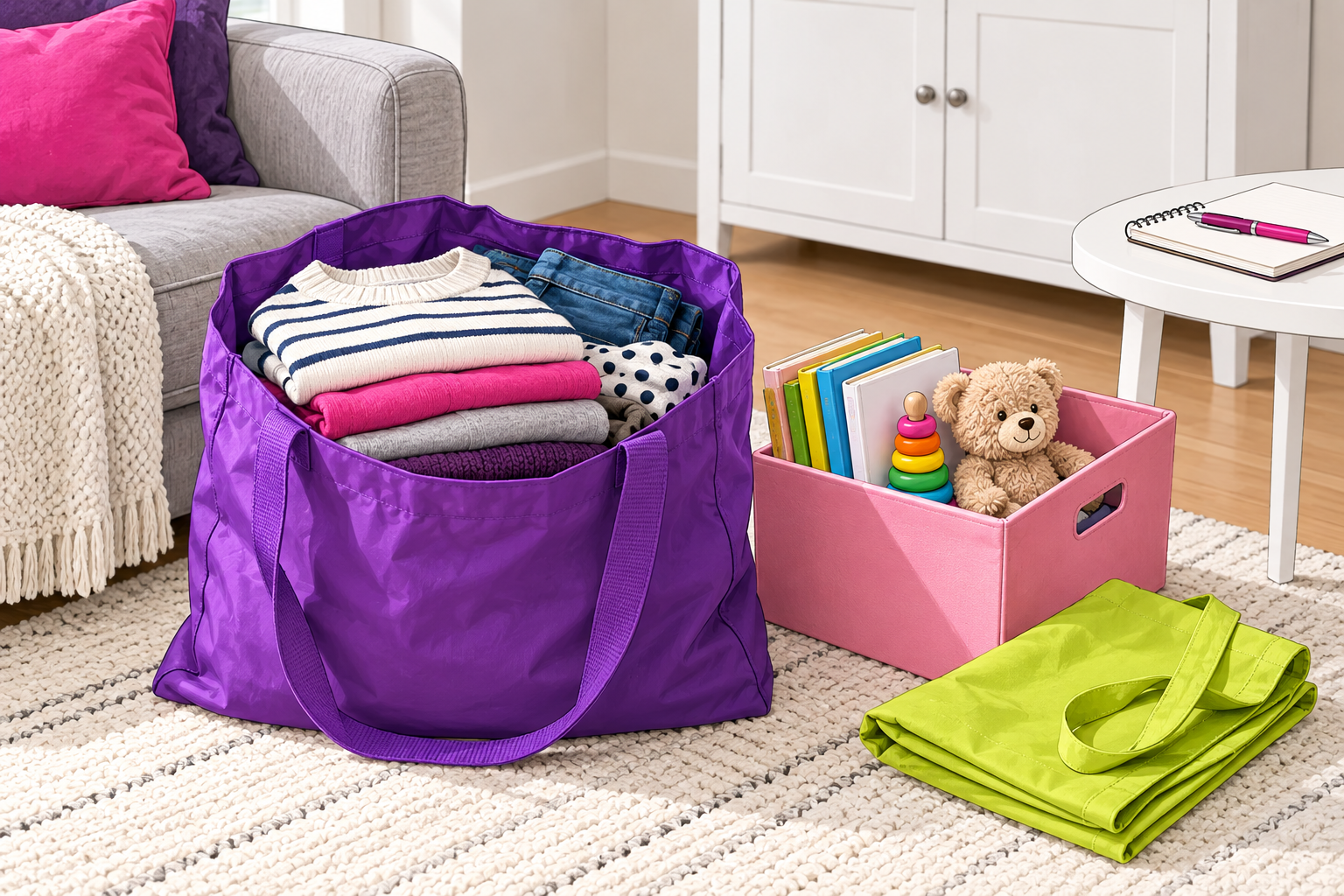
Make leaving the house part of the task
Choosing what you no longer need can feel like the main part of decluttering. But a bag that waits beside the sofa for weeks still takes up space. In a busy Portsmouth or Southsea home, it helps to decide how belongings will leave before sorting another cupboard. Begin with one small outgoing group and choose a next step you can realistically finish.
Separate the decisions from the destination
Keep items you have decided to pass on separate from things you are still considering. You do not need to rush uncertain choices to fill a bag. Group outgoing items by the route they need: a possible donation, an agreed gift to someone you know, or something that needs a suitable recycling or disposal route. Avoid assuming that everything you no longer want is suitable to donate.
Check before making a journey
Before taking a box anywhere, check the organisation’s current acceptance list, item-condition requirements and drop-off arrangements. Different places may accept different things, and available space can change. Ask directly if you are unsure about a particular item. Do not leave bags outside a closed shop or collection point. For a bulky item, confirm any collection arrangements and costs before agreeing to them.
Choose a route that fits your week
Link a small drop-off to a journey you already expect to make, where that is practical. If transport is difficult, look into an appropriate collection route rather than building an ever-larger pile. Keep any appointment or reminder in the calendar you actually use. You can plan one manageable bag at a time; the aim is to finish a useful step, not to clear every room at once.
Put a boundary around selling and giving away
Selling can add photographs, messages and collection arrangements to the task. Decide which items are worth that effort for you and when you will review anything still waiting. If giving something to a friend or relative, ask whether they want it before putting it aside for them. Agree the handover rather than making an indefinite holding pile. You remain free to reconsider the route if the arrangement does not happen.
Close the loop before starting again
Once an item has gone, return the bag or container to its usual place and clear the temporary sorting surface. Keep only the practical information you still need. Notice what made the process easy or awkward, and use that when planning the next small area. If outgoing belongings keep getting stuck, a simpler destination or a smaller batch may be more useful than another storage box.
If you would like practical help working through a space and choosing manageable next steps, tell Amal about your home and postcode. Scope, availability and any costs are discussed before you commit.