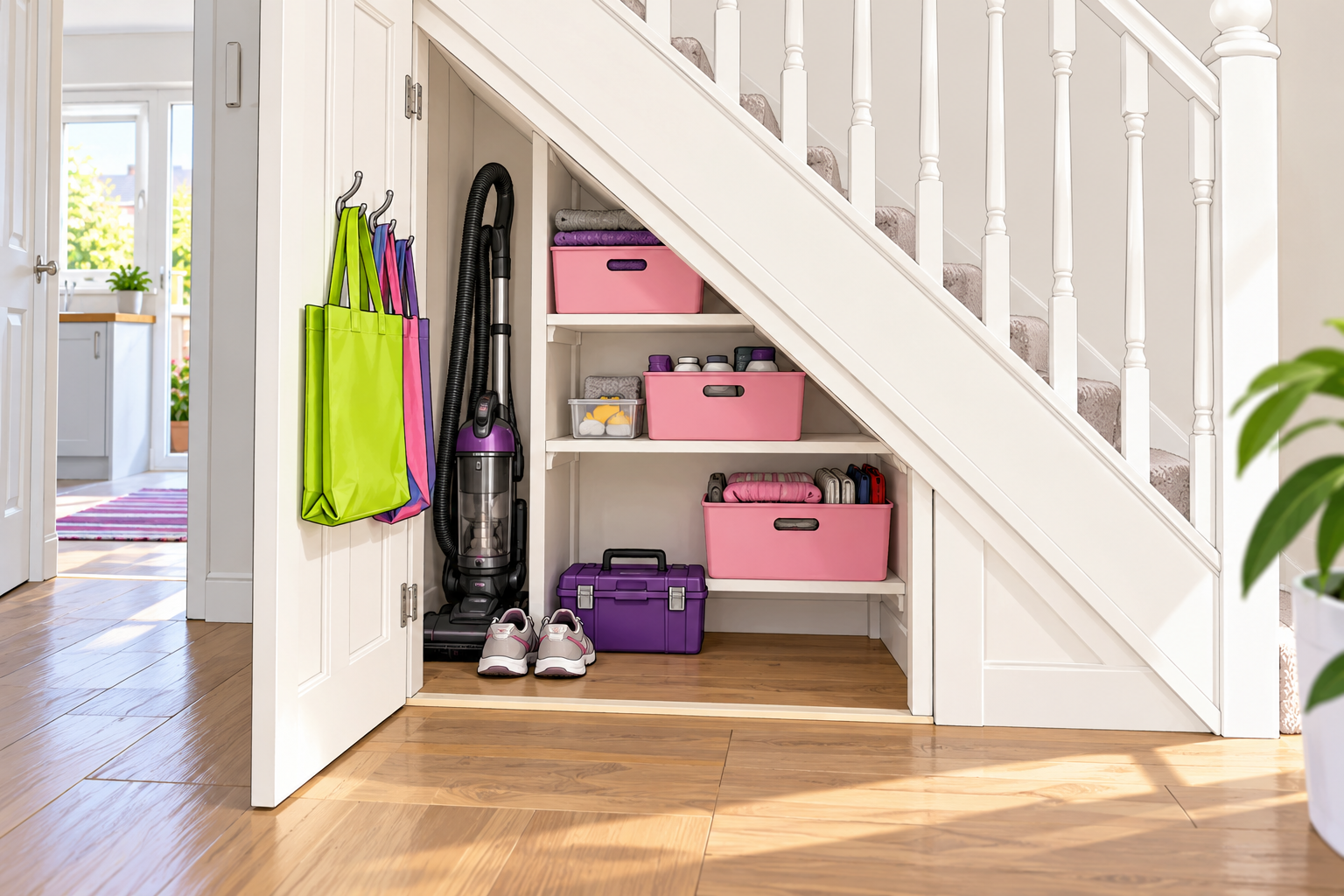
Choose what this cupboard is for
The space under the stairs often becomes a home for anything without an obvious place: shopping bags, tools, shoes and the vacuum cleaner. In a Portsmouth terrace or a Southsea family home, that small cupboard can be useful storage. Start by naming the two or three jobs you most need it to do. You are making space for everyday use, rather than trying to fit every spare possession behind one door.
Work through one reachable section
Choose a short session and take out only what you can comfortably sort and return before stopping. Keep the hallway and stairs clear while you work. Group similar items on a nearby surface: bags together, tools together, household supplies together. Leave fitted equipment alone. If the cupboard contains a meter, electrical equipment or ventilation, keep the required access and clearance and follow the relevant equipment guidance; storage should not obstruct it.
Notice what belongs somewhere else
Ask whether each group supports the cupboard’s purpose. A coat used every morning may need an easier place than the back of a deep shelf. A box of keepsakes might be better with other stored belongings. Put items that belong elsewhere in one small container, then return them to their proper places before finishing. Avoid creating a second unsorted pile in another room simply to make this cupboard look clear.
Give the awkward shapes their space first
A vacuum cleaner or folding item needs room to come out without lifting several other things. Place those larger everyday items first, leaving a straightforward route to the door. Keep heavier belongings low and within comfortable reach. Use stable existing shelves as intended and avoid balancing boxes in the sloping space. A small tray can collect loose accessories, provided you can see what is in it and lift it comfortably.
Set a limit for the things that multiply
Shopping bags and spare cloths can fill whatever space you give them. Choose a sensible amount for your household and a defined place to keep them. Fold reusable bags into one bag, for example, rather than letting them spread across the floor. Check duplicates before deciding what you need. For anything you plan to pass on, choose a realistic next step and check the recipient’s current acceptance rules before making a journey.
Try it before buying storage
Use the cupboard for a few days. Can you get the vacuum out, return the shopping bags and see the small things you need? Change one awkward part before adding containers. If a box would help, measure the available space and check that the door can still open fully. A handwritten label on an existing container may be enough. The useful test is whether putting things away feels easier after an ordinary day.
If you would like help finding a manageable starting point, tell Amal about your space and postcode. The Home Helper offers practical organising support in Southsea and Portsmouth, with scope and costs discussed before you commit.